
3. What you see (and what you're choosing not to)
Where you put your attention shapes what you believe is possible. Most of us are doomscrolling our own experience without realising it.

2. The cost of your explanatory style
Your explanatory style is the story your brain tells you before you've had time to think. Here's how to catch it — and change it.
1. Radical Optimism Redux
Cynicism might feel intellectually rigorous, but it's never actually helped anyone get anything done. Here's what I think works instead — and the bit I want to argue about.

Feedback: a gift, or a kick in the teeth?
Feedback can be a genuine gift, the thing that helps someone get better. It can also do real damage, even when it's accurate, if hearing it knocks the person's confidence. So it's worth knowing when to give it and when to sit on it.

Demanding predictable solutions for uncertain and complex problems
Wanting to know exactly what your money buys is fair enough. But when the problem is genuinely uncertain, the more certainty you demand up front, the worse your odds of actually solving the problem.

Permission, forgiveness and workplace adulting
Grace Hopper said it's better to ask forgiveness than permission. Plenty of leaders wish their teams believed her. But there are good reasons people keep asking, and being frustrated at them doesn't shift it.

Recalibrate your approach to strategic risk to achieve your goals
The public sector's instinct is to prevent and eliminate risk wherever it can. That compliance instinct feels responsible, though ironically its often the thing stopping people from getting anything done.

Want to lead? Do less.
A leader told me yesterday she was burning out trying to stay on top of everything. The trouble was the everything: she really was trying to do all of it, which is not the job.

Walking the talk on lifting the women around you
If you have a decent gender balance across the whole company but it thins steadily the higher you look, until the board is frankly embarrassing - well, that means you’ve got a leaky pipeline. Work on fixing that - here are some ideas for where to start.
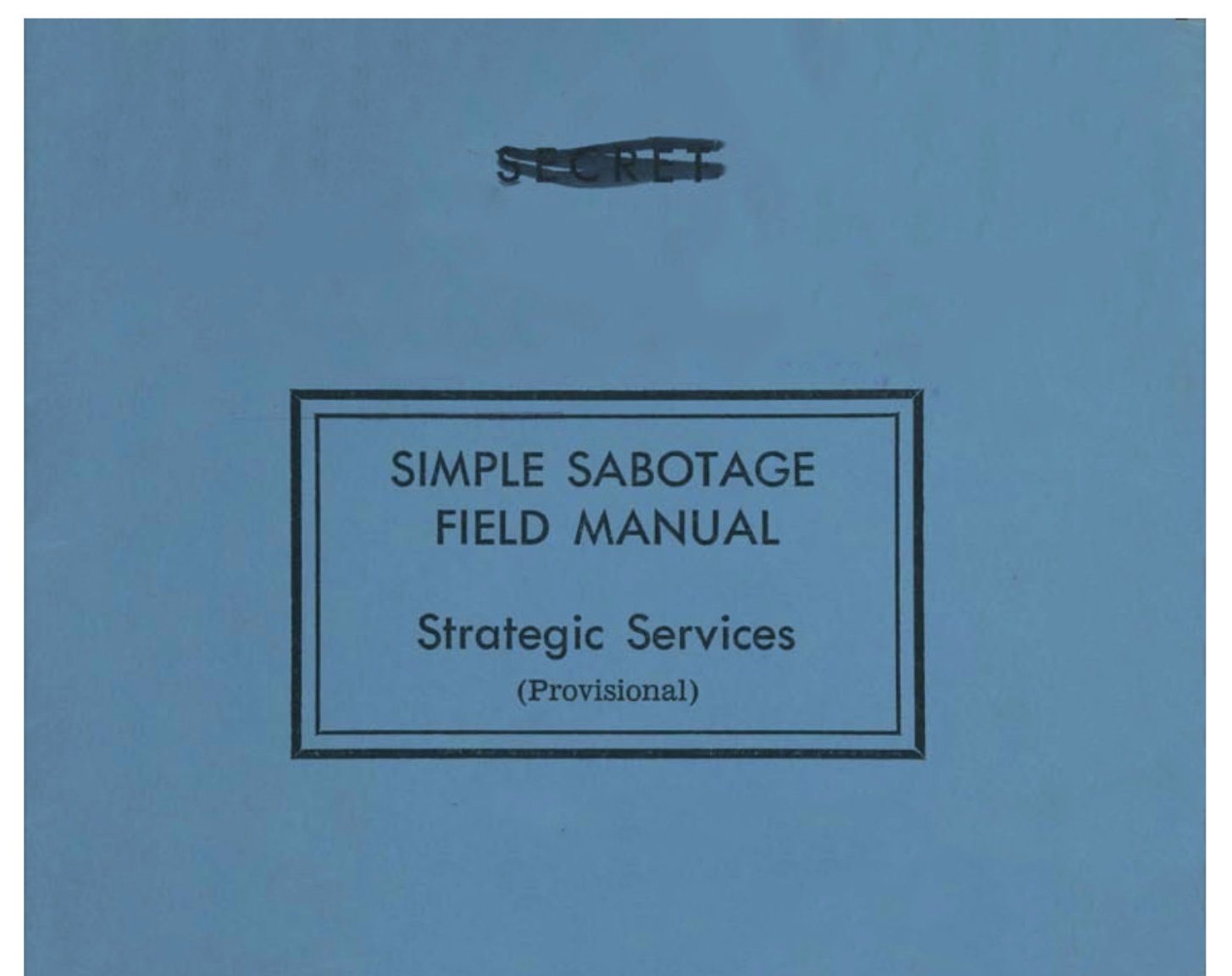
Organisational self-sabotage: name it to tame it
In 1944 the CIA's predecessor taught ordinary citizens how to quietly wreck their own workplaces. Eighty years on, every one of those tactics is alive and well in a meeting near you.

Services and content that are useful, usable and used: who wouldn’t want that?
The World Bank published its guidance for years, then checked the analytics and found nearly a third of the PDF reports had never once been opened. Putting something online is not the same as it being used.

A gardening metaphor
A gardener never starts from nothing. There's soil, climate, shade, pollinators, seeds blown in on the wind. You can plan the garden on paper, and you still have to work with what's already in the ground.

A truly caring workplace watches the waves
After a few years thinking about burnout and workplace trauma, I've decided our usual models of resilience and "how things are going" are wrong. A caring workplace watches the conditions, not just the people.

Yeah but…I don’t really have anything worth sharing
I've heard this from women I've coached, and I've caught myself thinking it too. It wasn't true for them and it isn't true for you: what's obvious to you usually isn't to anyone else.

The death of design
Lately I've read a lot of articles mourning the death of design and research, apparently eaten alive by product. I'm not buying it.

Yeah but…how can we invest in continuous improvement when there’s no more money?
The opportunity of government service transformation is immense - but how do we fund it when the pot is empty?

Yeah but…this place doesn’t want to work in the open
Some places really are that political, and I get the fear. But "we can't work in the open here" is rarely that cut and dry - so don’t let it stop you seeing just how much you can get away with.

Yeah but…what if I embarrass myself?
My (ex)husband is learning to write prose, badly and bravely. It has me thinking about how we dodge the things we're not yet good at, exactly when doing them in public is how we'd get good.

Welcoming and settling in
Two weeks into my new role at Public Digital, and I'm struck by how much a thoughtful onboarding changes things. A short thank-you to the people who made joining feel gentle.

Services - how to even start?
Before anything clever, the basics: what services do you have, who are they for, what are they meant to achieve, and what do they cost? Surprisingly few organisations can answer all four.